The ROI of Replacing Traditional Phone Answering Services With AI
The ROI of Replacing Traditional Phone Answering Services With AI
The ROI of Replacing Traditional Phone Answering Services With AI
See how an AI phone answering service can lower call costs, capture leads, book appointments, and improve ROI compared with traditional services.
See how an AI phone answering service can lower call costs, capture leads, book appointments, and improve ROI compared with traditional services.
Updates
Updates
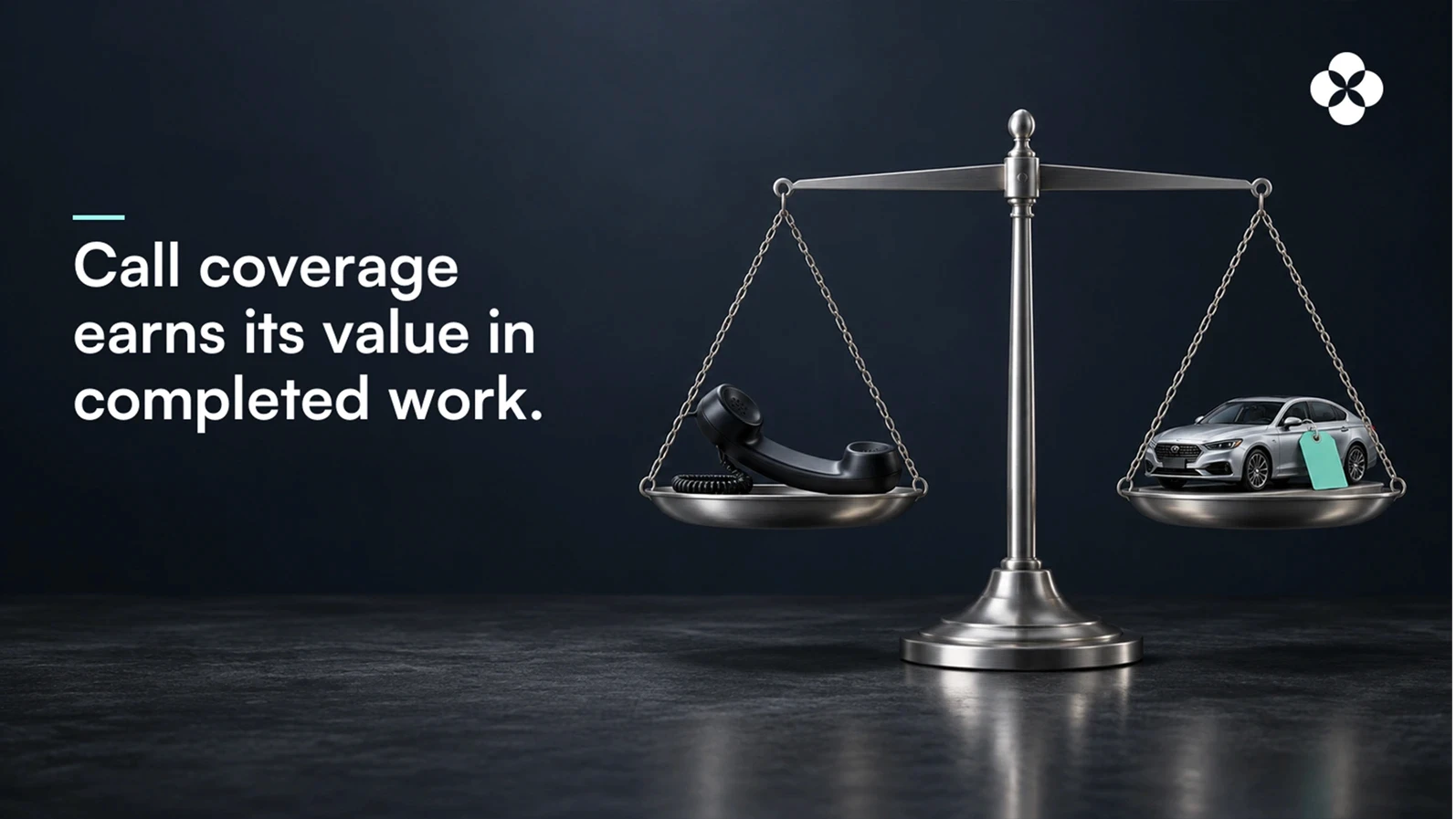
Every inbound call costs something to handle. The bigger question is whether that call turns into an appointment, a qualified lead, or revenue for the business.
An AI phone answering service changes the math by automating routine conversations while keeping calls moving 24/7. Compared with traditional answering services, an AI answering service can reduce operating costs, respond faster, and capture opportunities that might otherwise be missed. Here is where the ROI can come from.
What Is an AI Phone Answering Service?
An AI phone answering service uses conversational AI to answer inbound calls and handle common requests without requiring a person to pick up every time.
Depending on the system, an AI voice agent can answer questions, qualify callers, schedule appointments, route calls, collect information, and update connected business systems. This makes it much more useful than a basic automated phone answering service that simply plays recorded options.
How AI Phone Answering Services Work
When someone calls, the AI call answering system listens to what the caller says and responds based on the business's configured workflows and information.
A caller might ask to schedule an appointment, check availability, speak with a department, or get an answer to a common question. The AI can handle supported requests directly or transfer the caller when human help is needed.
AI Phone Answering Service vs. Traditional Answering Service
Traditional answering services rely on human agents who answer calls for multiple businesses. They can provide a personal touch, but pricing may depend on minutes, call volume, coverage hours, or the level of service required.
An AI receptionist handles many of the same routine conversations automatically and can scale when several customers call at once. The main difference comes down to how calls are handled, how easily capacity scales, and what each completed interaction costs the business.
What Businesses Really Pay for Traditional Phone Answering Services
The monthly bill is only one part of the cost. Businesses also need to look at what happens when calls take too long to answer, messages sit waiting for follow-up, or employees still have to complete work after the answering service finishes the call.
Monthly Answering Service Fees
Traditional services may charge a monthly subscription plus fees based on minutes, calls, or usage. Higher call volume usually means a higher bill.
Businesses should compare those costs against how many useful calls the service actually handles. A cheap monthly plan may offer poor value if employees still spend hours following up on incomplete messages.
After-Hours and Weekend Costs
Evenings and weekends are exactly when many businesses need extra coverage. Depending on the provider and plan, expanded coverage can increase answering costs.
An AI receptionist service can provide continuous coverage without scheduling another employee for a night or weekend shift.
Costs Associated With Missed or Delayed Calls
A missed call can cost far more than the price of answering it. A potential customer who cannot get help may simply call another business.
The impact depends on the value of each lead. For businesses where one booked appointment or customer can be worth hundreds or thousands of dollars, a small number of missed opportunities can add up quickly.
Internal Administrative Costs
An answering service may take the message, but someone inside the business often has to do the rest.
Employees may still need to return the call, enter information into a CRM, schedule the appointment, update records, or route the request internally. Those minutes add up across hundreds of calls.
How an AI Phone Answering Service Reduces Operating Costs
Cost savings are one of the easiest parts of AI ROI to understand. Instead of adding people every time call volume grows, businesses can automate a larger share of routine call handling.
Lower Cost Per Answered Call
An AI call answering system can handle repeated conversations without requiring a paid staff member or outsourced agent for each call.
As call volume increases, that can reduce the effective cost of handling each routine interaction. The actual savings will depend on the provider, usage, integrations, and current answering costs.
Reduced Staffing Requirements
Receptionists and customer service employees often spend large parts of the day answering the same basic questions.
AI can take on repetitive calls while employees handle situations that require judgment, problem-solving, or a personal conversation. Businesses can increase call capacity without automatically increasing headcount.
Fewer Overtime and After-Hours Staffing Expenses
Providing extended phone coverage with employees can mean overtime, additional shifts, or dedicated after-hours staff.
An AI answering service can cover those periods automatically. Human employees can then step in only when the situation requires them.
Reduced Training and Employee Turnover Costs
Hiring reception and call-handling staff comes with recruiting, onboarding, training, supervision, and turnover costs.
AI does not remove the need for people, but it can reduce how heavily a business depends on employees for repetitive phone work. That can make staffing needs easier to manage as call volume changes.
How AI Answering Services Generate Revenue, Not Just Cost Savings
Reducing expenses matters, but the larger ROI may come from the calls a business actually converts.
An AI receptionist can help turn more inbound demand into measurable outcomes instead of voicemail messages and callback lists.
Capturing More Inbound Leads
If the phone rings while staff are busy, an AI voice agent can still answer.
The caller can explain what they need, provide contact information, and take the next available step. That gives the business a better chance of keeping the lead.
Converting More Calls Into Appointments
A caller who wants an appointment should ideally be able to schedule it during the same conversation.
When connected with the right scheduling tools, an AI phone answering service can check availability and help complete the booking. That removes the delay between initial interest and appointment confirmation.
Recovering After-Hours Opportunities
Customers do not always call from 9 to 5. They call after work, at night, on weekends, or whenever they finally have time.
24/7 coverage gives businesses a chance to capture that demand while the customer is actively looking for help.
Reducing Lead Response Time
The fastest follow-up is often answering the original call.
An AI receptionist can respond immediately rather than putting a caller into a queue for tomorrow's callbacks. For high-intent leads, that speed can make a meaningful difference.
Read more: AI Receptionist for Dealership: Transforming Dealership Management Systems with AI
How to Calculate the ROI of an AI Phone Answering Service
AI ROI should be measured against actual business outcomes. That means looking beyond the software subscription and comparing total costs, savings, and additional revenue.
Step 1: Calculate Your Current Phone Answering Costs
Start with everything currently spent on phone coverage. Include receptionist wages, outsourced answering services, overtime, after-hours coverage, training, and administrative time related to call handling.
This creates a realistic baseline for comparison.
Step 2: Estimate Revenue Lost From Missed Calls
Track how many calls go unanswered, reach voicemail, or fail to receive timely follow-up. Then estimate how many could reasonably become qualified leads or appointments.
The goal is not to assume every missed call equals a lost sale. Businesses need a realistic estimate based on their own conversion rates and customer value.
Step 3: Estimate Additional Revenue From AI
Next, estimate how many additional calls an AI receptionist could capture and how many could become booked appointments or qualified leads.
Multiply the expected additional conversions by the average value of each completed appointment, sale, or customer.
Step 4: Compare Revenue Gains and Cost Savings Against AI Costs
A simple way to think about ROI is:
ROI = (Financial Benefit − AI Cost) ÷ AI Cost × 100
Financial benefit can include both direct operating savings and additional gross profit or contribution margin from recovered opportunities.
Example AI Phone Answering Service ROI Calculation
Consider a business spending $4,000 per month across answering services and related call-handling labor. It switches to an AI solution costing $2,000 and saves $2,000 in operating expenses.
If better call coverage also generates $4,000 in additional monthly contribution from recovered appointments, the total monthly benefit is $6,000. After subtracting the $2,000 AI cost, the net benefit is $4,000, producing a 200% ROI in this simplified example.
Actual results will vary, but the example shows why businesses should measure both sides of the equation: lower costs and recovered revenue.
AI Phone Answering Service vs. Human Receptionist: ROI Comparison
Factor | Human Receptionist | AI Phone Answering Service |
Availability | Based on scheduled hours | Can operate 24/7 |
Simultaneous calls | Limited | Can handle multiple calls |
Routine questions | Handled manually | Can be automated |
Appointment scheduling | Manual | Can be automated with integration |
Scaling call volume | May require more staff | Can scale more easily |
Human judgment | Strong | Requires escalation for complex situations |
Training | Ongoing | Workflow configuration and updates |
Cost structure | Wages and staffing costs | Platform and usage costs |
The better option depends on the business. Many companies may get stronger results by letting AI handle routine, high-volume interactions while employees focus on conversations that genuinely need a person.
Where an AI Receptionist Can Improve Employee Productivity
Every repetitive call takes time away from something else. An AI receptionist can remove some of that routine work from employees' plates.
Reducing Repetitive Call Handling
Hours can disappear answering the same questions about business hours, appointments, availability, directions, or basic service information.
Automating those conversations gives employees more time for work that requires their expertise.
Allowing Staff to Focus on High-Value Work
A salesperson should be selling. A service advisor should be helping customers. A property manager should be managing properties.
Using an automated phone answering service for routine requests lets employees spend more of their day on work tied directly to customers, operations, and revenue.
Automating Call Documentation
Some AI systems can capture caller information, conversation outcomes, and next steps automatically.
When integrated with the appropriate systems, that can reduce manual data entry and make follow-up easier.
Read more: How an AI Receptionist for Dealerships Enhances Your Human Front Desk
How AI Voice Agents Improve the Customer Experience
ROI also depends on what happens to the customer. Faster and easier phone interactions can reduce friction before a sale or appointment ever happens.
Faster Call Answering
Customers generally call because they want an answer or action now.
An AI voice agent can pick up immediately, even when employees are already handling other customers.
24/7 Availability
Continuous availability means customers do not have to wait until the next business day for basic help.
For companies receiving significant evening or weekend demand, this can create a meaningful advantage.
More Consistent Customer Interactions
Human performance naturally varies depending on workload, training, and experience.
An AI receptionist follows defined workflows consistently. Businesses can control how common requests are handled and when callers should be escalated.
Faster Appointment Scheduling
Every extra step between "I want an appointment" and "You're booked" creates another opportunity for the customer to drop off.
AI appointment scheduling can shorten that process by handling supported bookings during the original call.
Read more: How an AI Receptionist Improves the Customer Experience From the First Call
When Replacing a Traditional Answering Service With AI Makes the Most Sense
An AI phone answering service tends to make the strongest business case when call volume is high, many conversations are repetitive, missed calls are common, or customers frequently call outside normal hours.
It can also make sense when businesses need to scale phone coverage without continuously adding staff. Companies should still consider which conversations require empathy, complex judgment, or specialized expertise and build clear human escalation into the process.
Industries That Can Benefit From an AI Phone Answering Service
The strongest use cases tend to involve businesses where phone calls regularly lead to appointments, sales, or urgent service requests.
Automotive Dealerships
Dealerships receive calls for sales, service, availability, directions, appointment changes, and other common requests.
An automotive AI receptionist can help capture calls, schedule appointments, route customers, and reduce pressure on dealership staff.
Healthcare and Dental Practices
Practices handle large volumes of scheduling and routine administrative calls.
AI may help with supported scheduling and general administrative requests, provided the system and workflows meet applicable privacy, security, and regulatory requirements.
Home Service Businesses
Plumbers, HVAC companies, electricians, roofers, and other contractors often receive urgent calls when employees are already on jobs.
AI coverage can help capture those leads and collect the information needed for the next step.
Law Firms
Law firms can use AI for initial call capture, basic intake, routing, and appointment requests.
Sensitive or substantive legal conversations should be escalated appropriately rather than handled as routine automation.
Property Management Companies
Property managers deal with tenant questions, maintenance requests, prospective renters, and after-hours calls.
An AI receptionist can help identify the reason for the call and route requests according to predefined workflows.
Multi-Location Businesses
Businesses with several locations often have more complicated routing needs.
An AI call answering system can identify the caller's location or intent and direct them toward the appropriate branch, department, or workflow.
What to Look for in an AI Phone Answering Service
The cheapest AI tool will not automatically deliver the strongest ROI. Businesses need a system that can actually handle the conversations their customers are calling about.
Natural-Sounding AI Voice Technology
Calls should feel clear and easy to navigate. Awkward pauses, rigid scripts, and poor intent recognition can create unnecessary frustration.
A strong AI voice agent should be able to handle natural conversational language while staying within the business's approved workflows.
Appointment Scheduling Capabilities
For appointment-based businesses, scheduling can have a direct impact on ROI.
Look for an AI receptionist service that can support real scheduling workflows rather than simply taking a message for someone to handle later.
CRM Integration
CRM integration can help connect calls with the rest of the customer journey.
Caller information, outcomes, appointments, and follow-up needs can then become part of the business's existing workflow.
Intelligent Call Routing
Some callers need automation. Others need a specific employee immediately.
Good routing helps the AI recognize that difference and move the caller to the appropriate destination.
Analytics and Call Reporting
Businesses need data to know whether AI is actually improving performance.
Useful reporting may include call volume, answer rates, call outcomes, appointments, transfers, missed opportunities, and other conversion metrics.
Customizable Call Workflows
Different businesses handle calls differently. Even two companies in the same industry may have completely different qualification, scheduling, and escalation processes.
The AI should adapt to those workflows instead of forcing every business into the same script.
Should AI Completely Replace Your Traditional Phone Answering Service?
It depends on the calls the business receives. Routine conversations such as appointment requests, basic questions, lead capture, and routing are often good candidates for automation.
More complicated conversations may still need a person. A practical approach is to use AI for calls it can handle efficiently and create a clear path to human support when the situation calls for it.
Read more: Dealership Voice AI: How AI Is Transforming Scheduling and Customer Service
The Long-Term ROI of Switching to an AI Phone Answering Service
The value of AI can grow as call volume increases. Businesses can handle more conversations without increasing phone staffing at the same rate, while faster responses can help capture more of the demand they already generate.
Pam gives businesses an AI voice agent that can answer calls, manage routine conversations, capture leads, support appointment scheduling, and integrate into existing workflows. For businesses ready to see how an AI receptionist could affect call costs and revenue, book a Pam demo today.
Frequently Asked Questions
How Much Can an AI Answering Service Save a Business?
Savings depend on current staffing costs, call volume, answering service fees, missed-call rates, and the price of the AI platform. Businesses should compare total phone-handling costs before and after implementation rather than looking at the software fee alone.
Is an AI Receptionist Cheaper Than a Traditional Answering Service?
It can be, particularly for businesses with high call volume, extended coverage needs, or repetitive conversations. The actual difference depends on each provider's pricing, usage, integrations, and the amount of human support still required.
Can an AI Phone Answering Service Book Appointments?
Yes, many AI phone answering services can support appointment booking when connected to compatible scheduling systems. They may also handle confirmations, changes, cancellations, and other scheduling requests depending on the setup.
Can an AI Answering Service Handle Multiple Calls at Once?
Yes. One major advantage of an AI answering service is the ability to handle multiple simultaneous conversations without requiring another receptionist for each caller. Capacity will still depend on the specific platform and service plan.
Is an AI Phone Answering Service Available 24/7?
Many AI phone answering services can operate 24/7, including evenings, weekends, and holidays. Businesses can configure workflows for different times and escalate calls to human staff when necessary.
Every inbound call costs something to handle. The bigger question is whether that call turns into an appointment, a qualified lead, or revenue for the business.
An AI phone answering service changes the math by automating routine conversations while keeping calls moving 24/7. Compared with traditional answering services, an AI answering service can reduce operating costs, respond faster, and capture opportunities that might otherwise be missed. Here is where the ROI can come from.
What Is an AI Phone Answering Service?
An AI phone answering service uses conversational AI to answer inbound calls and handle common requests without requiring a person to pick up every time.
Depending on the system, an AI voice agent can answer questions, qualify callers, schedule appointments, route calls, collect information, and update connected business systems. This makes it much more useful than a basic automated phone answering service that simply plays recorded options.
How AI Phone Answering Services Work
When someone calls, the AI call answering system listens to what the caller says and responds based on the business's configured workflows and information.
A caller might ask to schedule an appointment, check availability, speak with a department, or get an answer to a common question. The AI can handle supported requests directly or transfer the caller when human help is needed.
AI Phone Answering Service vs. Traditional Answering Service
Traditional answering services rely on human agents who answer calls for multiple businesses. They can provide a personal touch, but pricing may depend on minutes, call volume, coverage hours, or the level of service required.
An AI receptionist handles many of the same routine conversations automatically and can scale when several customers call at once. The main difference comes down to how calls are handled, how easily capacity scales, and what each completed interaction costs the business.
What Businesses Really Pay for Traditional Phone Answering Services
The monthly bill is only one part of the cost. Businesses also need to look at what happens when calls take too long to answer, messages sit waiting for follow-up, or employees still have to complete work after the answering service finishes the call.
Monthly Answering Service Fees
Traditional services may charge a monthly subscription plus fees based on minutes, calls, or usage. Higher call volume usually means a higher bill.
Businesses should compare those costs against how many useful calls the service actually handles. A cheap monthly plan may offer poor value if employees still spend hours following up on incomplete messages.
After-Hours and Weekend Costs
Evenings and weekends are exactly when many businesses need extra coverage. Depending on the provider and plan, expanded coverage can increase answering costs.
An AI receptionist service can provide continuous coverage without scheduling another employee for a night or weekend shift.
Costs Associated With Missed or Delayed Calls
A missed call can cost far more than the price of answering it. A potential customer who cannot get help may simply call another business.
The impact depends on the value of each lead. For businesses where one booked appointment or customer can be worth hundreds or thousands of dollars, a small number of missed opportunities can add up quickly.
Internal Administrative Costs
An answering service may take the message, but someone inside the business often has to do the rest.
Employees may still need to return the call, enter information into a CRM, schedule the appointment, update records, or route the request internally. Those minutes add up across hundreds of calls.
How an AI Phone Answering Service Reduces Operating Costs
Cost savings are one of the easiest parts of AI ROI to understand. Instead of adding people every time call volume grows, businesses can automate a larger share of routine call handling.
Lower Cost Per Answered Call
An AI call answering system can handle repeated conversations without requiring a paid staff member or outsourced agent for each call.
As call volume increases, that can reduce the effective cost of handling each routine interaction. The actual savings will depend on the provider, usage, integrations, and current answering costs.
Reduced Staffing Requirements
Receptionists and customer service employees often spend large parts of the day answering the same basic questions.
AI can take on repetitive calls while employees handle situations that require judgment, problem-solving, or a personal conversation. Businesses can increase call capacity without automatically increasing headcount.
Fewer Overtime and After-Hours Staffing Expenses
Providing extended phone coverage with employees can mean overtime, additional shifts, or dedicated after-hours staff.
An AI answering service can cover those periods automatically. Human employees can then step in only when the situation requires them.
Reduced Training and Employee Turnover Costs
Hiring reception and call-handling staff comes with recruiting, onboarding, training, supervision, and turnover costs.
AI does not remove the need for people, but it can reduce how heavily a business depends on employees for repetitive phone work. That can make staffing needs easier to manage as call volume changes.
How AI Answering Services Generate Revenue, Not Just Cost Savings
Reducing expenses matters, but the larger ROI may come from the calls a business actually converts.
An AI receptionist can help turn more inbound demand into measurable outcomes instead of voicemail messages and callback lists.
Capturing More Inbound Leads
If the phone rings while staff are busy, an AI voice agent can still answer.
The caller can explain what they need, provide contact information, and take the next available step. That gives the business a better chance of keeping the lead.
Converting More Calls Into Appointments
A caller who wants an appointment should ideally be able to schedule it during the same conversation.
When connected with the right scheduling tools, an AI phone answering service can check availability and help complete the booking. That removes the delay between initial interest and appointment confirmation.
Recovering After-Hours Opportunities
Customers do not always call from 9 to 5. They call after work, at night, on weekends, or whenever they finally have time.
24/7 coverage gives businesses a chance to capture that demand while the customer is actively looking for help.
Reducing Lead Response Time
The fastest follow-up is often answering the original call.
An AI receptionist can respond immediately rather than putting a caller into a queue for tomorrow's callbacks. For high-intent leads, that speed can make a meaningful difference.
Read more: AI Receptionist for Dealership: Transforming Dealership Management Systems with AI
How to Calculate the ROI of an AI Phone Answering Service
AI ROI should be measured against actual business outcomes. That means looking beyond the software subscription and comparing total costs, savings, and additional revenue.
Step 1: Calculate Your Current Phone Answering Costs
Start with everything currently spent on phone coverage. Include receptionist wages, outsourced answering services, overtime, after-hours coverage, training, and administrative time related to call handling.
This creates a realistic baseline for comparison.
Step 2: Estimate Revenue Lost From Missed Calls
Track how many calls go unanswered, reach voicemail, or fail to receive timely follow-up. Then estimate how many could reasonably become qualified leads or appointments.
The goal is not to assume every missed call equals a lost sale. Businesses need a realistic estimate based on their own conversion rates and customer value.
Step 3: Estimate Additional Revenue From AI
Next, estimate how many additional calls an AI receptionist could capture and how many could become booked appointments or qualified leads.
Multiply the expected additional conversions by the average value of each completed appointment, sale, or customer.
Step 4: Compare Revenue Gains and Cost Savings Against AI Costs
A simple way to think about ROI is:
ROI = (Financial Benefit − AI Cost) ÷ AI Cost × 100
Financial benefit can include both direct operating savings and additional gross profit or contribution margin from recovered opportunities.
Example AI Phone Answering Service ROI Calculation
Consider a business spending $4,000 per month across answering services and related call-handling labor. It switches to an AI solution costing $2,000 and saves $2,000 in operating expenses.
If better call coverage also generates $4,000 in additional monthly contribution from recovered appointments, the total monthly benefit is $6,000. After subtracting the $2,000 AI cost, the net benefit is $4,000, producing a 200% ROI in this simplified example.
Actual results will vary, but the example shows why businesses should measure both sides of the equation: lower costs and recovered revenue.
AI Phone Answering Service vs. Human Receptionist: ROI Comparison
Factor | Human Receptionist | AI Phone Answering Service |
Availability | Based on scheduled hours | Can operate 24/7 |
Simultaneous calls | Limited | Can handle multiple calls |
Routine questions | Handled manually | Can be automated |
Appointment scheduling | Manual | Can be automated with integration |
Scaling call volume | May require more staff | Can scale more easily |
Human judgment | Strong | Requires escalation for complex situations |
Training | Ongoing | Workflow configuration and updates |
Cost structure | Wages and staffing costs | Platform and usage costs |
The better option depends on the business. Many companies may get stronger results by letting AI handle routine, high-volume interactions while employees focus on conversations that genuinely need a person.
Where an AI Receptionist Can Improve Employee Productivity
Every repetitive call takes time away from something else. An AI receptionist can remove some of that routine work from employees' plates.
Reducing Repetitive Call Handling
Hours can disappear answering the same questions about business hours, appointments, availability, directions, or basic service information.
Automating those conversations gives employees more time for work that requires their expertise.
Allowing Staff to Focus on High-Value Work
A salesperson should be selling. A service advisor should be helping customers. A property manager should be managing properties.
Using an automated phone answering service for routine requests lets employees spend more of their day on work tied directly to customers, operations, and revenue.
Automating Call Documentation
Some AI systems can capture caller information, conversation outcomes, and next steps automatically.
When integrated with the appropriate systems, that can reduce manual data entry and make follow-up easier.
Read more: How an AI Receptionist for Dealerships Enhances Your Human Front Desk
How AI Voice Agents Improve the Customer Experience
ROI also depends on what happens to the customer. Faster and easier phone interactions can reduce friction before a sale or appointment ever happens.
Faster Call Answering
Customers generally call because they want an answer or action now.
An AI voice agent can pick up immediately, even when employees are already handling other customers.
24/7 Availability
Continuous availability means customers do not have to wait until the next business day for basic help.
For companies receiving significant evening or weekend demand, this can create a meaningful advantage.
More Consistent Customer Interactions
Human performance naturally varies depending on workload, training, and experience.
An AI receptionist follows defined workflows consistently. Businesses can control how common requests are handled and when callers should be escalated.
Faster Appointment Scheduling
Every extra step between "I want an appointment" and "You're booked" creates another opportunity for the customer to drop off.
AI appointment scheduling can shorten that process by handling supported bookings during the original call.
Read more: How an AI Receptionist Improves the Customer Experience From the First Call
When Replacing a Traditional Answering Service With AI Makes the Most Sense
An AI phone answering service tends to make the strongest business case when call volume is high, many conversations are repetitive, missed calls are common, or customers frequently call outside normal hours.
It can also make sense when businesses need to scale phone coverage without continuously adding staff. Companies should still consider which conversations require empathy, complex judgment, or specialized expertise and build clear human escalation into the process.
Industries That Can Benefit From an AI Phone Answering Service
The strongest use cases tend to involve businesses where phone calls regularly lead to appointments, sales, or urgent service requests.
Automotive Dealerships
Dealerships receive calls for sales, service, availability, directions, appointment changes, and other common requests.
An automotive AI receptionist can help capture calls, schedule appointments, route customers, and reduce pressure on dealership staff.
Healthcare and Dental Practices
Practices handle large volumes of scheduling and routine administrative calls.
AI may help with supported scheduling and general administrative requests, provided the system and workflows meet applicable privacy, security, and regulatory requirements.
Home Service Businesses
Plumbers, HVAC companies, electricians, roofers, and other contractors often receive urgent calls when employees are already on jobs.
AI coverage can help capture those leads and collect the information needed for the next step.
Law Firms
Law firms can use AI for initial call capture, basic intake, routing, and appointment requests.
Sensitive or substantive legal conversations should be escalated appropriately rather than handled as routine automation.
Property Management Companies
Property managers deal with tenant questions, maintenance requests, prospective renters, and after-hours calls.
An AI receptionist can help identify the reason for the call and route requests according to predefined workflows.
Multi-Location Businesses
Businesses with several locations often have more complicated routing needs.
An AI call answering system can identify the caller's location or intent and direct them toward the appropriate branch, department, or workflow.
What to Look for in an AI Phone Answering Service
The cheapest AI tool will not automatically deliver the strongest ROI. Businesses need a system that can actually handle the conversations their customers are calling about.
Natural-Sounding AI Voice Technology
Calls should feel clear and easy to navigate. Awkward pauses, rigid scripts, and poor intent recognition can create unnecessary frustration.
A strong AI voice agent should be able to handle natural conversational language while staying within the business's approved workflows.
Appointment Scheduling Capabilities
For appointment-based businesses, scheduling can have a direct impact on ROI.
Look for an AI receptionist service that can support real scheduling workflows rather than simply taking a message for someone to handle later.
CRM Integration
CRM integration can help connect calls with the rest of the customer journey.
Caller information, outcomes, appointments, and follow-up needs can then become part of the business's existing workflow.
Intelligent Call Routing
Some callers need automation. Others need a specific employee immediately.
Good routing helps the AI recognize that difference and move the caller to the appropriate destination.
Analytics and Call Reporting
Businesses need data to know whether AI is actually improving performance.
Useful reporting may include call volume, answer rates, call outcomes, appointments, transfers, missed opportunities, and other conversion metrics.
Customizable Call Workflows
Different businesses handle calls differently. Even two companies in the same industry may have completely different qualification, scheduling, and escalation processes.
The AI should adapt to those workflows instead of forcing every business into the same script.
Should AI Completely Replace Your Traditional Phone Answering Service?
It depends on the calls the business receives. Routine conversations such as appointment requests, basic questions, lead capture, and routing are often good candidates for automation.
More complicated conversations may still need a person. A practical approach is to use AI for calls it can handle efficiently and create a clear path to human support when the situation calls for it.
Read more: Dealership Voice AI: How AI Is Transforming Scheduling and Customer Service
The Long-Term ROI of Switching to an AI Phone Answering Service
The value of AI can grow as call volume increases. Businesses can handle more conversations without increasing phone staffing at the same rate, while faster responses can help capture more of the demand they already generate.
Pam gives businesses an AI voice agent that can answer calls, manage routine conversations, capture leads, support appointment scheduling, and integrate into existing workflows. For businesses ready to see how an AI receptionist could affect call costs and revenue, book a Pam demo today.
Frequently Asked Questions
How Much Can an AI Answering Service Save a Business?
Savings depend on current staffing costs, call volume, answering service fees, missed-call rates, and the price of the AI platform. Businesses should compare total phone-handling costs before and after implementation rather than looking at the software fee alone.
Is an AI Receptionist Cheaper Than a Traditional Answering Service?
It can be, particularly for businesses with high call volume, extended coverage needs, or repetitive conversations. The actual difference depends on each provider's pricing, usage, integrations, and the amount of human support still required.
Can an AI Phone Answering Service Book Appointments?
Yes, many AI phone answering services can support appointment booking when connected to compatible scheduling systems. They may also handle confirmations, changes, cancellations, and other scheduling requests depending on the setup.
Can an AI Answering Service Handle Multiple Calls at Once?
Yes. One major advantage of an AI answering service is the ability to handle multiple simultaneous conversations without requiring another receptionist for each caller. Capacity will still depend on the specific platform and service plan.
Is an AI Phone Answering Service Available 24/7?
Many AI phone answering services can operate 24/7, including evenings, weekends, and holidays. Businesses can configure workflows for different times and escalate calls to human staff when necessary.
Ready to See Pam in Action?
Book a demo today and see why hundreds of dealerships hire Pam to capture more revenue, day and night.
Ready to See Pam in Action?
Book a demo today and see why hundreds of dealerships hire Pam to capture more revenue, day and night.
Ready to See Pam in Action?
Book a demo today and see why hundreds of dealerships hire Pam to capture more revenue, day and night.
Pam is the AI Workforce for Car Dealerships.
© 2026 Dream Lab AI Inc. All Rights Reserved.