Why Dealership Call Routing Alone Isn't Enough for Modern Dealerships
Why Dealership Call Routing Alone Isn't Enough for Modern Dealerships
Why Dealership Call Routing Alone Isn't Enough for Modern Dealerships
Learn why dealership call routing falls short and how an AI dealership phone system improves call handling, scheduling, customer service, and revenue.
Learn why dealership call routing falls short and how an AI dealership phone system improves call handling, scheduling, customer service, and revenue.
Basics
Basics
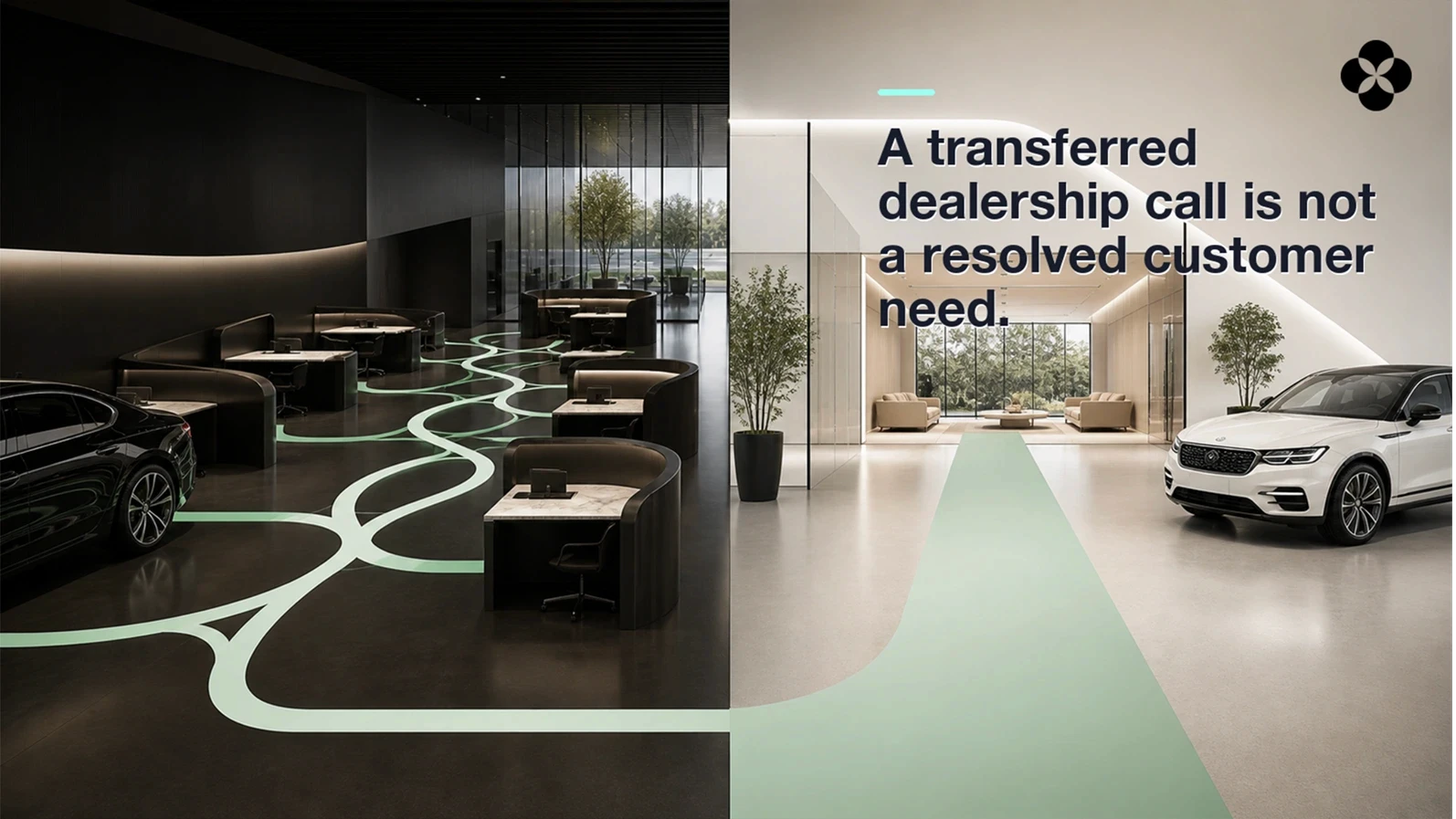
Traditional dealership call routing helps send customers to sales, service, parts, or another department, but today’s callers expect a little more. They want quick answers, easy appointment options, and a clear next step without sitting through long phone menus or being transferred several times.
An AI dealership phone system makes the experience much easier by understanding why the customer is calling, answering common questions, and handling routine requests right away. This article looks at where basic call routing falls short and how AI improves dealership call management across the entire business.
What Is Dealership Call Routing?

Dealership call routing is the process of directing incoming calls to the department or employee most likely to help the customer. It is a familiar part of dealership phone systems and is often managed through an automated menu, receptionist, or business development center.
The goal here is to move each caller to the correct destination. However, routing alone does very little to help the customer complete the reason for their call. It does not always help the customer get an answer, book an appointment, or complete what they called to do.
How Traditional Dealership Call Routing Works
Most traditional phone systems ask callers to select from a list of departments.
A customer may hear options such as:
Press 1 for sales
Press 2 for service
Press 3 for parts
Press 4 for finance
Press 0 for the operator
Once the caller makes a selection, the system transfers the call to that department. The customer may then wait on hold, reach a voicemail box, or get transferred again if the first selection was incorrect.
Why Dealerships Have Used Call Routing for Years
Call routing has remained popular because it gives dealerships a basic way to organize high call volumes. It helps separate sales, service, parts, finance, and general inquiries so each department receives relevant calls.
It also reduces some pressure on the main front desk by letting customers choose where they want to go. For years, this was considered an efficient way to manage incoming calls.
Customer expectations have changed, though. Callers now expect the phone experience to feel as quick and convenient as the digital tools they use every day.
The Biggest Limitations of Traditional Dealership Call Routing
Traditional routing can move calls, but it cannot fully understand what customers need. It also relies on callers knowing which department can solve their problem.
These limitations often create extra steps during a conversation that should feel simple.
Customers Don't Want to Navigate Phone Menus
Phone menus ask customers to translate their question into a department.
A caller with a dashboard warning light may be unsure whether to choose service, parts, or roadside assistance. A customer asking about a trade-in may not know whether sales or finance is the better option.
Every menu selection adds effort. Many customers would rather explain what they need in their own words and receive help right away.
Call Transfers Create Poor Customer Experiences
Transfers can make a short request feel unnecessarily complicated.
A caller may explain the same situation to several employees before reaching the right person. Each transfer adds another wait and another chance for the call to disconnect.
A strong customer experience starts with making it easy for callers to get useful assistance during the first interaction.
Missed Calls Lead to Missed Revenue
A missed call may represent a service appointment, test drive, vehicle inquiry, parts order, or financing opportunity.
When customers cannot reach someone quickly, they often continue searching. Another dealership that answers first may earn the appointment or sale.
Basic routing provides little value when the receiving department is busy, unavailable, or already handling another customer.
Limited Availability Outside Business Hours
Customers frequently research vehicles and plan service appointments in the evenings or on weekends.
A traditional dealership phone system may send these callers to voicemail. That leaves the customer waiting until someone returns the call during business hours.
An AI-powered system can continue answering questions and completing routine tasks at any time of day.
Why Modern Dealerships Need an AI Dealership Phone System
An AI dealership phone system does much more than identify a department and transfer a call. It listens to the caller, understands the request, and determines the most useful response.
Sometimes that means routing the call. In many cases, the AI can complete the request during the same conversation.
AI Understands Customer Intent
Customers can explain their needs naturally instead of selecting a menu option.
They may say:
“I need an oil change this week.”
“Is the blue SUV still available?”
“I need to reschedule my appointment.”
“Can someone check if a part is in stock?”
AI identifies the reason for the call and responds based on the customer's intent. This creates a conversation that feels faster and easier.
AI Answers Common Customer Questions Instantly
Many dealership calls involve simple questions about:
Business hours
Directions
Service options
Appointment availability
Vehicle inventory
Parts
Department contact information
An automotive AI receptionist can answer these questions immediately. Customers receive useful information while dealership employees stay focused on in-person visitors and more detailed conversations.
AI Reduces Unnecessary Call Transfers
AI can complete many routine requests without sending the caller to another person.
When a transfer is needed, the system can identify the correct department and collect relevant information first. The employee receives better context, and the caller has a smoother handoff.
AI Operates 24/7
An AI phone system can support callers during evenings, weekends, holidays, and busy periods.
Customers can ask questions, request information, or schedule service whenever it fits their routine. This helps the dealership stay responsive beyond regular operating hours.
Read more: Customer Experience Platform for Auto Dealers: Why It Matters More Than Ever
Dealership Call Routing vs. an Automotive AI Receptionist
Traditional call routing and AI receptionists both help manage incoming calls, but their capabilities are very different.
Feature | Traditional Dealership Call Routing | Automotive AI Receptionist |
Customer interaction | Uses menu options and keypad selections | Understands natural spoken requests |
Primary function | Transfers calls between departments | Answers, assists, schedules, and transfers |
Appointment scheduling | Requires a staff member in most cases | Can book appointments automatically |
Availability | Depends on staff and business hours | Provides 24/7 support |
Simultaneous calls | Limited by available lines and employees | Handles multiple callers at once |
Common questions | Routes callers to an employee | Answers many questions instantly |
Customer information | Usually collected after transfer | Can gather details before transfer |
Call analytics | Basic call volume and duration data | Offers deeper insight into call intent and outcomes |
Customer experience | Depends on menus, holds, and transfers | Creates a more direct and conversational experience |
Traditional routing remains useful for connecting certain calls to live staff. An AI receptionist adds the ability to understand and complete more of the conversation before a transfer becomes necessary.
How an AI Voice Agent for Dealerships Improves Every Department

An AI voice agent for dealerships supports the full dealership rather than serving only one team. It can adapt each conversation based on the caller's request and the department involved.
Sales Department
AI can answer basic inventory questions, collect buyer information, schedule test drives, and route high-intent callers to an available salesperson.
It can also capture leads outside showroom hours, helping the sales team follow up with customers who are already interested in a specific vehicle.
Service Department
Service departments receive a steady flow of calls related to maintenance, repairs, recalls, appointment changes, and vehicle concerns.
AI can support dealership service appointment scheduling by checking availability, booking visits, rescheduling appointments, and sending confirmations. Service advisors can then spend more time helping customers in the drive.
Parts Department
Customers often call to ask about part availability, pricing, compatibility, or order status.
An AI receptionist can collect vehicle details, identify the reason for the request, and connect the caller with the parts department when a specialist is needed. This gives employees more context before they pick up the call.
Finance & General Inquiries
AI can answer general questions about dealership hours, directions, accepted payment methods, and contact information.
For finance-related calls, it can collect basic details and route customers to the appropriate team member. This makes the conversation easier for the caller and more productive for dealership staff.
Read more: Dealership Voice AI: How AI Is Transforming Scheduling and Customer Service
Business Benefits Beyond Basic Dealership Call Management
Smarter call handling improves phone operations and even supports revenue, employee productivity, and the overall customer experience. Here are more benefits of investing in better dealership call management:
Increase Service Appointment Bookings
Customers are more likely to book when they can check availability and confirm a time during the same call.
AI keeps the process moving while the customer is ready to schedule, helping service departments fill more appointment slots.
Capture More Sales Leads
Every answered call gives the dealership another chance to connect with a potential buyer.
AI can collect names, contact details, preferred vehicles, and purchase timelines, helping sales teams receive better-qualified leads.
Reduce Hold Times
AI responds immediately and can handle several conversations at once.
Customers spend less time waiting, even during high-volume periods such as weekday mornings, lunch hours, and seasonal promotions.
Improve Customer Satisfaction
Fast answers and simple conversations create a better first impression.
Customers appreciate reaching a system that understands what they need and helps them take the next step without extra effort.
Lower Receptionist Workload
Routine questions and basic scheduling requests can take up a large part of the front desk's day.
AI handles these conversations so receptionists can focus on customers inside the dealership, internal coordination, and calls that benefit from a personal touch.
Improve Staff Productivity
Sales representatives, service advisors, parts specialists, and finance employees receive fewer interruptions from basic requests.
Generate Better Call Analytics and Reporting
Traditional systems may show the number of calls, hold times, and missed calls. AI can provide deeper information about why people call and what happens during each conversation.
Dealerships can review common requests, appointment outcomes, call trends, and customer intent. These insights can help improve staffing, training, marketing, and operations.
Signs Your Current Dealership Call Routing System Is Holding You Back
A dealership may have outgrown basic routing when phone challenges begin affecting customers and employees.
Common signs include:
Customers regularly report difficulty reaching the right department.
Callers spend too much time on hold.
Employees transfer the same customer several times.
Service appointment requests frequently go to voicemail.
After-hours calls receive limited assistance.
Front desk employees feel overwhelmed during peak periods.
Call abandonment rates continue to rise.
The dealership lacks clear information about call outcomes.
Sales and service teams lose opportunities because follow-up happens too late.
These patterns usually point to a larger call management issue. Improving the routing menu alone may provide only a temporary fix.
How to Choose the Right AI Dealership Phone System
The right solution should understand automotive workflows and work with the tools the dealership already uses.
Important features include:
Natural, conversational voice technology
Intelligent call routing
Service scheduler integration
CRM and DMS compatibility
Appointment booking and rescheduling
Multi-department support
After-hours coverage
Call reporting and analytics
Multi-location capabilities
Flexible customization
Pam is built to support dealership conversations across sales, service, parts, finance, and general inquiries. It can answer routine questions, understand customer intent, schedule appointments, and connect callers with live staff when personal assistance adds value.
Choosing a dealership-focused platform like Pam helps create a smoother implementation because the technology is already aligned with common automotive processes and customer requests.
The Future of Dealership Call Routing Is AI-Powered Customer Conversations
Modern phone service is moving beyond pressing numbers and transferring calls. Customers want to explain what they need, receive a helpful answer, and complete the next step during one conversation.
Pam helps dealerships create that experience by combining intelligent routing with natural conversations, appointment scheduling, lead capture, and around-the-clock assistance. It supports the front desk while helping every department respond faster and make better use of incoming opportunities.
Dealerships ready to improve call handling can explore how Pam fits into their existing phone system and daily workflow. With the right AI support, every call can become a faster, easier, and more valuable interaction. Book a demo to know more.
Frequently Asked Questions About Dealership Call Routing
How does dealership call routing differ from an AI dealership phone system?
Dealership call routing primarily transfers callers to departments based on menu selections. An AI dealership phone system understands spoken requests, answers common questions, schedules appointments, gathers customer information, and transfers calls only when live assistance is needed.
Can an automotive AI receptionist schedule service appointments?
Yes. An automotive AI receptionist can connect with a dealership's service scheduler to check availability, book appointments, reschedule visits, and provide confirmation during the call.
How does AI reduce missed calls at a dealership?
AI reduces missed calls by answering multiple callers at once and providing coverage during busy periods, after business hours, weekends, and holidays. It can assist customers immediately instead of sending every call to voicemail.
Can AI answer sales, service, and parts department calls?
Yes. An AI voice agent can support sales, service, parts, finance, and general inquiries. It adjusts the conversation based on the customer's request and routes specialized questions to the correct employee.
Does an AI dealership phone system work after business hours?
Yes. An AI dealership phone system can provide 24/7 support, allowing customers to ask questions, share sales interest, and schedule service outside the dealership's regular operating hours.
Traditional dealership call routing helps send customers to sales, service, parts, or another department, but today’s callers expect a little more. They want quick answers, easy appointment options, and a clear next step without sitting through long phone menus or being transferred several times.
An AI dealership phone system makes the experience much easier by understanding why the customer is calling, answering common questions, and handling routine requests right away. This article looks at where basic call routing falls short and how AI improves dealership call management across the entire business.
What Is Dealership Call Routing?
Dealership call routing is the process of directing incoming calls to the department or employee most likely to help the customer. It is a familiar part of dealership phone systems and is often managed through an automated menu, receptionist, or business development center.
The goal here is to move each caller to the correct destination. However, routing alone does very little to help the customer complete the reason for their call. It does not always help the customer get an answer, book an appointment, or complete what they called to do.
How Traditional Dealership Call Routing Works
Most traditional phone systems ask callers to select from a list of departments.
A customer may hear options such as:
Press 1 for sales
Press 2 for service
Press 3 for parts
Press 4 for finance
Press 0 for the operator
Once the caller makes a selection, the system transfers the call to that department. The customer may then wait on hold, reach a voicemail box, or get transferred again if the first selection was incorrect.
Why Dealerships Have Used Call Routing for Years
Call routing has remained popular because it gives dealerships a basic way to organize high call volumes. It helps separate sales, service, parts, finance, and general inquiries so each department receives relevant calls.
It also reduces some pressure on the main front desk by letting customers choose where they want to go. For years, this was considered an efficient way to manage incoming calls.
Customer expectations have changed, though. Callers now expect the phone experience to feel as quick and convenient as the digital tools they use every day.
The Biggest Limitations of Traditional Dealership Call Routing
Traditional routing can move calls, but it cannot fully understand what customers need. It also relies on callers knowing which department can solve their problem.
These limitations often create extra steps during a conversation that should feel simple.
Customers Don't Want to Navigate Phone Menus
Phone menus ask customers to translate their question into a department.
A caller with a dashboard warning light may be unsure whether to choose service, parts, or roadside assistance. A customer asking about a trade-in may not know whether sales or finance is the better option.
Every menu selection adds effort. Many customers would rather explain what they need in their own words and receive help right away.
Call Transfers Create Poor Customer Experiences
Transfers can make a short request feel unnecessarily complicated.
A caller may explain the same situation to several employees before reaching the right person. Each transfer adds another wait and another chance for the call to disconnect.
A strong customer experience starts with making it easy for callers to get useful assistance during the first interaction.
Missed Calls Lead to Missed Revenue
A missed call may represent a service appointment, test drive, vehicle inquiry, parts order, or financing opportunity.
When customers cannot reach someone quickly, they often continue searching. Another dealership that answers first may earn the appointment or sale.
Basic routing provides little value when the receiving department is busy, unavailable, or already handling another customer.
Limited Availability Outside Business Hours
Customers frequently research vehicles and plan service appointments in the evenings or on weekends.
A traditional dealership phone system may send these callers to voicemail. That leaves the customer waiting until someone returns the call during business hours.
An AI-powered system can continue answering questions and completing routine tasks at any time of day.
Why Modern Dealerships Need an AI Dealership Phone System
An AI dealership phone system does much more than identify a department and transfer a call. It listens to the caller, understands the request, and determines the most useful response.
Sometimes that means routing the call. In many cases, the AI can complete the request during the same conversation.
AI Understands Customer Intent
Customers can explain their needs naturally instead of selecting a menu option.
They may say:
“I need an oil change this week.”
“Is the blue SUV still available?”
“I need to reschedule my appointment.”
“Can someone check if a part is in stock?”
AI identifies the reason for the call and responds based on the customer's intent. This creates a conversation that feels faster and easier.
AI Answers Common Customer Questions Instantly
Many dealership calls involve simple questions about:
Business hours
Directions
Service options
Appointment availability
Vehicle inventory
Parts
Department contact information
An automotive AI receptionist can answer these questions immediately. Customers receive useful information while dealership employees stay focused on in-person visitors and more detailed conversations.
AI Reduces Unnecessary Call Transfers
AI can complete many routine requests without sending the caller to another person.
When a transfer is needed, the system can identify the correct department and collect relevant information first. The employee receives better context, and the caller has a smoother handoff.
AI Operates 24/7
An AI phone system can support callers during evenings, weekends, holidays, and busy periods.
Customers can ask questions, request information, or schedule service whenever it fits their routine. This helps the dealership stay responsive beyond regular operating hours.
Read more: Customer Experience Platform for Auto Dealers: Why It Matters More Than Ever
Dealership Call Routing vs. an Automotive AI Receptionist
Traditional call routing and AI receptionists both help manage incoming calls, but their capabilities are very different.
Feature | Traditional Dealership Call Routing | Automotive AI Receptionist |
Customer interaction | Uses menu options and keypad selections | Understands natural spoken requests |
Primary function | Transfers calls between departments | Answers, assists, schedules, and transfers |
Appointment scheduling | Requires a staff member in most cases | Can book appointments automatically |
Availability | Depends on staff and business hours | Provides 24/7 support |
Simultaneous calls | Limited by available lines and employees | Handles multiple callers at once |
Common questions | Routes callers to an employee | Answers many questions instantly |
Customer information | Usually collected after transfer | Can gather details before transfer |
Call analytics | Basic call volume and duration data | Offers deeper insight into call intent and outcomes |
Customer experience | Depends on menus, holds, and transfers | Creates a more direct and conversational experience |
Traditional routing remains useful for connecting certain calls to live staff. An AI receptionist adds the ability to understand and complete more of the conversation before a transfer becomes necessary.
How an AI Voice Agent for Dealerships Improves Every Department
An AI voice agent for dealerships supports the full dealership rather than serving only one team. It can adapt each conversation based on the caller's request and the department involved.
Sales Department
AI can answer basic inventory questions, collect buyer information, schedule test drives, and route high-intent callers to an available salesperson.
It can also capture leads outside showroom hours, helping the sales team follow up with customers who are already interested in a specific vehicle.
Service Department
Service departments receive a steady flow of calls related to maintenance, repairs, recalls, appointment changes, and vehicle concerns.
AI can support dealership service appointment scheduling by checking availability, booking visits, rescheduling appointments, and sending confirmations. Service advisors can then spend more time helping customers in the drive.
Parts Department
Customers often call to ask about part availability, pricing, compatibility, or order status.
An AI receptionist can collect vehicle details, identify the reason for the request, and connect the caller with the parts department when a specialist is needed. This gives employees more context before they pick up the call.
Finance & General Inquiries
AI can answer general questions about dealership hours, directions, accepted payment methods, and contact information.
For finance-related calls, it can collect basic details and route customers to the appropriate team member. This makes the conversation easier for the caller and more productive for dealership staff.
Read more: Dealership Voice AI: How AI Is Transforming Scheduling and Customer Service
Business Benefits Beyond Basic Dealership Call Management
Smarter call handling improves phone operations and even supports revenue, employee productivity, and the overall customer experience. Here are more benefits of investing in better dealership call management:
Increase Service Appointment Bookings
Customers are more likely to book when they can check availability and confirm a time during the same call.
AI keeps the process moving while the customer is ready to schedule, helping service departments fill more appointment slots.
Capture More Sales Leads
Every answered call gives the dealership another chance to connect with a potential buyer.
AI can collect names, contact details, preferred vehicles, and purchase timelines, helping sales teams receive better-qualified leads.
Reduce Hold Times
AI responds immediately and can handle several conversations at once.
Customers spend less time waiting, even during high-volume periods such as weekday mornings, lunch hours, and seasonal promotions.
Improve Customer Satisfaction
Fast answers and simple conversations create a better first impression.
Customers appreciate reaching a system that understands what they need and helps them take the next step without extra effort.
Lower Receptionist Workload
Routine questions and basic scheduling requests can take up a large part of the front desk's day.
AI handles these conversations so receptionists can focus on customers inside the dealership, internal coordination, and calls that benefit from a personal touch.
Improve Staff Productivity
Sales representatives, service advisors, parts specialists, and finance employees receive fewer interruptions from basic requests.
Generate Better Call Analytics and Reporting
Traditional systems may show the number of calls, hold times, and missed calls. AI can provide deeper information about why people call and what happens during each conversation.
Dealerships can review common requests, appointment outcomes, call trends, and customer intent. These insights can help improve staffing, training, marketing, and operations.
Signs Your Current Dealership Call Routing System Is Holding You Back
A dealership may have outgrown basic routing when phone challenges begin affecting customers and employees.
Common signs include:
Customers regularly report difficulty reaching the right department.
Callers spend too much time on hold.
Employees transfer the same customer several times.
Service appointment requests frequently go to voicemail.
After-hours calls receive limited assistance.
Front desk employees feel overwhelmed during peak periods.
Call abandonment rates continue to rise.
The dealership lacks clear information about call outcomes.
Sales and service teams lose opportunities because follow-up happens too late.
These patterns usually point to a larger call management issue. Improving the routing menu alone may provide only a temporary fix.
How to Choose the Right AI Dealership Phone System
The right solution should understand automotive workflows and work with the tools the dealership already uses.
Important features include:
Natural, conversational voice technology
Intelligent call routing
Service scheduler integration
CRM and DMS compatibility
Appointment booking and rescheduling
Multi-department support
After-hours coverage
Call reporting and analytics
Multi-location capabilities
Flexible customization
Pam is built to support dealership conversations across sales, service, parts, finance, and general inquiries. It can answer routine questions, understand customer intent, schedule appointments, and connect callers with live staff when personal assistance adds value.
Choosing a dealership-focused platform like Pam helps create a smoother implementation because the technology is already aligned with common automotive processes and customer requests.
The Future of Dealership Call Routing Is AI-Powered Customer Conversations
Modern phone service is moving beyond pressing numbers and transferring calls. Customers want to explain what they need, receive a helpful answer, and complete the next step during one conversation.
Pam helps dealerships create that experience by combining intelligent routing with natural conversations, appointment scheduling, lead capture, and around-the-clock assistance. It supports the front desk while helping every department respond faster and make better use of incoming opportunities.
Dealerships ready to improve call handling can explore how Pam fits into their existing phone system and daily workflow. With the right AI support, every call can become a faster, easier, and more valuable interaction. Book a demo to know more.
Frequently Asked Questions About Dealership Call Routing
How does dealership call routing differ from an AI dealership phone system?
Dealership call routing primarily transfers callers to departments based on menu selections. An AI dealership phone system understands spoken requests, answers common questions, schedules appointments, gathers customer information, and transfers calls only when live assistance is needed.
Can an automotive AI receptionist schedule service appointments?
Yes. An automotive AI receptionist can connect with a dealership's service scheduler to check availability, book appointments, reschedule visits, and provide confirmation during the call.
How does AI reduce missed calls at a dealership?
AI reduces missed calls by answering multiple callers at once and providing coverage during busy periods, after business hours, weekends, and holidays. It can assist customers immediately instead of sending every call to voicemail.
Can AI answer sales, service, and parts department calls?
Yes. An AI voice agent can support sales, service, parts, finance, and general inquiries. It adjusts the conversation based on the customer's request and routes specialized questions to the correct employee.
Does an AI dealership phone system work after business hours?
Yes. An AI dealership phone system can provide 24/7 support, allowing customers to ask questions, share sales interest, and schedule service outside the dealership's regular operating hours.
Ready to See Pam in Action?
Book a demo today and see why hundreds of dealerships hire Pam to capture more revenue, day and night.
Ready to See Pam in Action?
Book a demo today and see why hundreds of dealerships hire Pam to capture more revenue, day and night.
Ready to See Pam in Action?
Book a demo today and see why hundreds of dealerships hire Pam to capture more revenue, day and night.
Pam is the AI Workforce for Car Dealerships.
© 2026 Dream Lab AI Inc. All Rights Reserved.