AI Voice Agent for Dealership Service Departments: How It Helps Service Teams
AI Voice Agent for Dealership Service Departments: How It Helps Service Teams
AI Voice Agent for Dealership Service Departments: How It Helps Service Teams
Learn how an AI voice agent helps dealership service departments answer more calls, schedule appointments, reduce workloads, and capture revenue.
Learn how an AI voice agent helps dealership service departments answer more calls, schedule appointments, reduce workloads, and capture revenue.
Pro Tips
Pro Tips
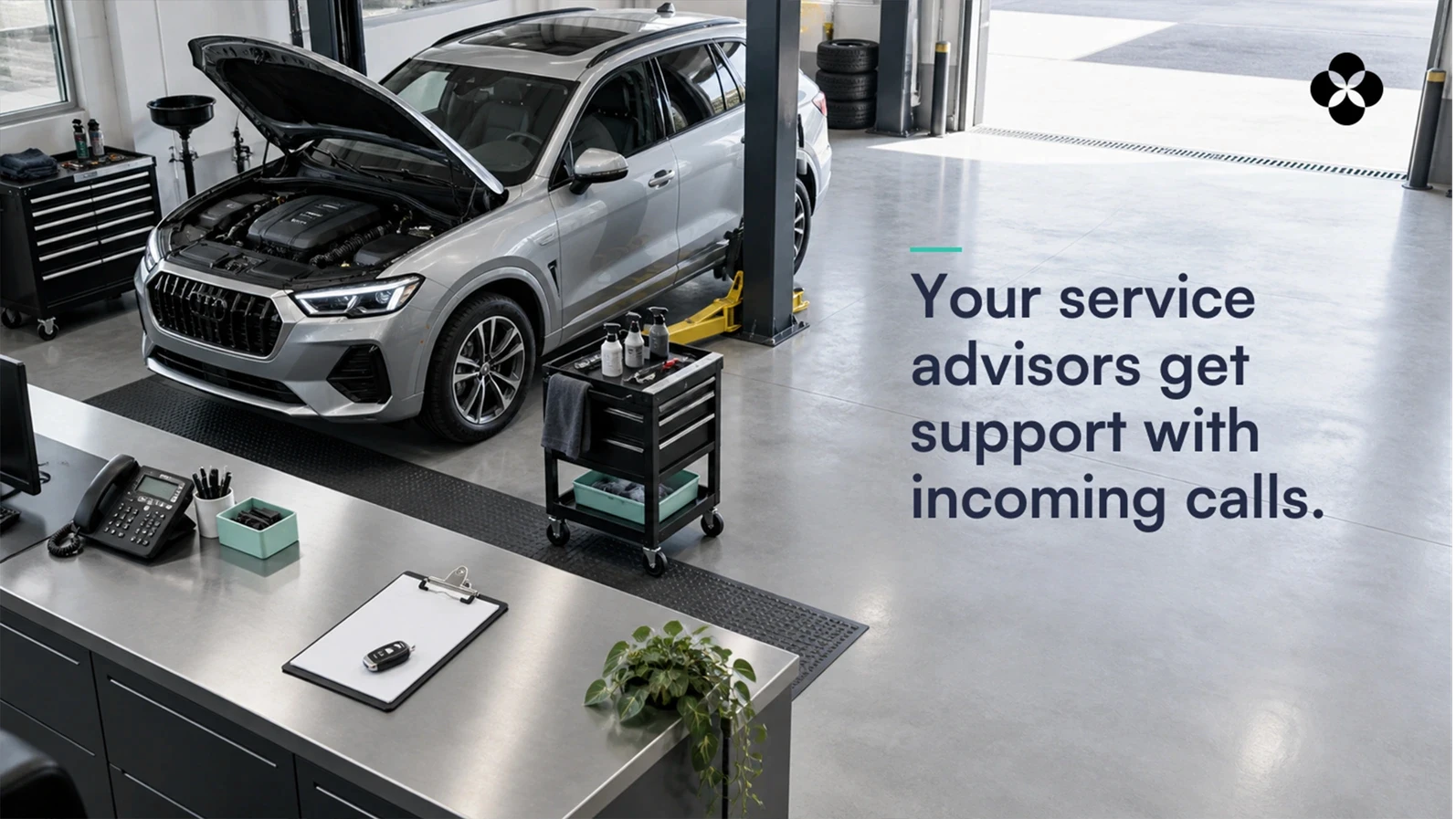
A busy service department can only handle so many phone calls at once.
An AI voice agent helps dealerships answer more of those calls without adding more work for service advisors. It can schedule appointments, answer common questions, collect customer and vehicle information, and route more complicated requests to employees.
For service departments dealing with missed calls, long hold times, and constant scheduling requests, that extra call capacity can help turn more customer conversations into booked appointments. In this article, we explain how that works.
Why Dealership Service Departments Need an AI Voice Agent
Service departments can get busy quickly, especially in the morning when customers are dropping off vehicles and calling at the same time. Advisors may be checking customers in, speaking with technicians, explaining repairs, and answering phones all within the same hour.
An automotive AI voice agent gives the department another way to manage that call volume without sending every unanswered customer to hold or voicemail.
High Call Volumes During Peak Service Hours
Service calls rarely arrive at convenient times. Several customers may call at once to schedule maintenance, check on a repair, or ask about an appointment.
There are only so many calls a service team can answer at the same time. A dealership AI voice agent can handle multiple supported conversations simultaneously, giving customers another way to get help when advisors are already occupied.
Missed Calls Can Mean Missed Service Revenue
A customer calling about an oil change, brake inspection, tire service, or repair is already showing an interest in bringing their vehicle in.
If nobody answers, they may leave a message. They may also call another service center that can help them sooner. Capturing more of those calls gives the dealership a better chance of turning existing demand into service appointments.
Long Hold Times Hurt the Customer Experience
Customers usually call because they want something relatively quickly. Waiting several minutes to ask about availability or schedule routine maintenance adds friction to a simple request.
Dealership call automation can take some routine conversations out of the queue, helping customers get answers sooner while freeing advisors to handle calls that need their attention.
Service Advisors Spend Too Much Time Answering Repetitive Questions
A large portion of service calls can involve the same basic requests: appointment availability, dealership hours, scheduling changes, or common service questions.
Answering those calls individually takes time away from active repair orders and customers already at the dealership. AI can handle many of these repetitive conversations while advisors focus on work that requires their experience.
What Can an AI Voice Agent Do for a Dealership Service Department?
An AI voice agent can handle much of the routine phone traffic that fills a service department's day. What it can actually complete depends on the platform, integrations, and workflows the dealership has in place.
Answer Service Calls 24/7
Customers do not always remember to schedule maintenance during dealership hours. They may call after work, late at night, or over the weekend.
An AI receptionist for dealerships can provide coverage during those hours and help customers with supported requests even when the service department is closed.
Schedule Service Appointments Automatically
When connected with compatible scheduling software, AI can ask what service the customer needs, collect vehicle information, check available times, and book an appointment.
That allows routine AI service appointment scheduling to happen during the original call without requiring an advisor to call the customer back.
Reschedule and Cancel Existing Appointments
Plans change, and customers often call simply because they need a different appointment time.
AI can support routine cancellations and rescheduling when connected to the appropriate dealership systems. That keeps simple appointment changes from adding another task to the service desk.
Answer Common Service Questions
An AI voice agent can answer supported questions about dealership hours, appointment availability, service processes, and other basic information.
More technical questions about repairs or vehicle problems can still be sent to a service advisor.
Route Complex Calls to the Right Department
Some conversations clearly need a person. A customer may have a complicated repair question, a complaint, or a request outside the AI's workflow.
The system can identify those situations and route the caller to the appropriate employee or department.
Capture Customer and Vehicle Information
AI can ask for the details the service team needs, including the customer's name, contact information, vehicle, mileage, and reason for calling.
Having that information ready gives advisors more context if they need to take over later.
Follow Up on Missed or Abandoned Calls
Depending on the platform and configuration, AI can also support follow-up workflows for calls that were missed or abandoned.
That gives the dealership another opportunity to reconnect with customers who were trying to reach the service department.
How an AI Voice Agent Improves Dealership Service Appointment Scheduling
Scheduling is one of the biggest sources of routine phone traffic for service departments. It is also one of the clearest opportunities for AI to take work off the team's plate.
Turning More Phone Calls Into Booked Appointments
When customers call to schedule service, the goal is to get them booked while they are ready to make an appointment.
An AI voice agent can move the conversation directly toward scheduling rather than taking a message for someone to handle later. That shortens the path between the initial call and a confirmed visit.
Providing Appointment Scheduling After Business Hours
Customers may decide they need service long after the dealership closes. Without automated scheduling, those callers usually have to leave a message or remember to try again tomorrow.
AI can keep appointment scheduling available after hours, giving the dealership a chance to capture that demand while the customer is ready to book.
Reducing Scheduling Errors
Manual scheduling can occasionally lead to missing information, incorrect appointment details, or communication problems.
When the AI follows a consistent workflow and connects directly with scheduling software, the same required information can be collected for each supported appointment.
Sending Appointment Confirmations and Reminders
The scheduling process does not necessarily stop after the appointment is booked. Depending on the system, AI can work alongside communication tools that send confirmations and reminders.
Giving customers clear appointment information can also make it easier for them to reschedule if their plans change.
How a Dealership AI Voice Agent Improves Customer Experience
A dealership AI voice agent adds capacity so more callers can get help quickly.
Faster Call Answering
AI can answer immediately, even when service advisors are already speaking with other customers.
More Consistent Customer Service
An AI voice agent follows the workflows the dealership sets for common calls. Customers are asked for the same important information and guided through a consistent process.
Natural Conversational Experiences
Modern voice AI allows callers to explain what they need in normal language rather than working through a long list of menu options.
Seamless Escalation to Human Employees
AI should know when a conversation needs human help.
When a request becomes too complicated or the customer asks to speak with someone, the system should be able to transfer or escalate the call according to the dealership's rules.
Read more: AI Receptionist for Dealership: Transforming Dealership Management Systems with AI
How an AI Voice Agent Helps Dealership Service Advisors
AI can improve the caller experience, but the service team also benefits from having fewer routine calls to manage.
Reduces Repetitive Administrative Tasks
Appointment scheduling, basic questions, cancellations, and information collection can take up a significant part of the day. Automating some of that work gives advisors fewer repetitive phone tasks to manage.
Gives Advisors More Time With In-Person Customers
When AI handles routine phone traffic, advisors can give more attention to the customers and vehicles already in front of them.
Helps Dealerships Manage Staffing Shortages
Adding another employee is not always practical, especially when call volume changes throughout the day. AI gives service departments additional call capacity without requiring staffing levels to rise every time phone traffic increases.
Handles Multiple Calls at the Same Time
One advisor can only speak with one caller at a time. An AI voice agent can manage multiple supported conversations simultaneously, depending on the platform.
That can help dealerships handle morning rushes and other spikes without creating long call queues.
Read more: Can an AI Dealership Receptionist Answer My Dealership's Phones and Book Appointments?
AI Voice Agent Integrations for Dealership Service Departments
An AI voice agent becomes much more useful when it can work with the dealership's existing technology. Integrations allow the conversation to lead directly into the systems employees already use.
Dealership Management System Integration
Dealership management system integrations can help connect customer, vehicle, and service information with existing dealership workflows.
Available capabilities will depend on the AI platform and DMS being used.
CRM Integration
CRM integration can connect conversations with existing customer records or create new records when needed. That gives the service team better visibility into previous interactions and future follow-up.
Service Scheduling Software Integration
Scheduling integration allows the AI to work with actual appointment availability. This is what allows the system to move beyond simply collecting appointment requests and support real-time booking.
Call Tracking and Analytics Integration
Call tracking can show managers what customers are calling about, which requests the AI handles, and where calls are being transferred. That information can help dealerships improve call workflows and identify common reasons customers contact the service department.
AI Voice Agent vs. Voicemail for Dealership Service Calls
Both can handle situations where an advisor cannot immediately answer, but they do very different things with the call.
Area | AI Voice Agent | Voicemail |
Response | Real-time conversation | Records a message |
Scheduling | Can support booking | Requires later follow-up |
Availability | Can operate 24/7 | Accepts messages 24/7 |
Information collection | Asks relevant questions | Depends on caller |
Call routing | Can route by intent | Requires staff review |
Staff workload | Automates routine requests | Creates callback tasks |
Immediate Conversation vs. Waiting for a Callback
An AI voice agent can start helping as soon as the customer calls. Voicemail asks the customer to leave a message and wait for someone to respond.
Appointment Booking vs. Message Collection
AI can potentially turn the call into a booked service appointment during the conversation. Voicemail can only record that the customer wanted an appointment. Someone still needs to call them back and complete the scheduling process.
24/7 Customer Assistance vs. Limited Follow-Up
Both systems can technically receive calls after hours, but only one can interact with the caller.
AI can answer supported questions and handle certain requests at night or over the weekend. Voicemail saves the message until staff return.
Why Customers May Abandon Voicemail
Leaving a message creates another step for the customer. They have to wait for the dealership to respond and be available when the callback comes.
Some customers may decide it is easier to contact another service provider that can help them immediately.
AI Voice Agent vs. Traditional Dealership Call Centers
Traditional call centers can provide valuable human support, but capacity still depends on how many employees are available. When call volume suddenly increases, customers may still end up waiting.
An automotive AI voice agent can handle multiple routine calls at the same time and provide coverage outside normal staffing hours. Human call center employees can then focus on complex requests, complaints, and conversations that need more judgment.
For many dealerships, AI and human support can work together rather than compete with each other.
Read more: Why AI Call Routing for Car Dealerships Is Better Than Traditional Call Routing
How an Automotive AI Voice Agent Can Increase Service Department Revenue
Service revenue depends partly on getting customers onto the schedule. If calls are missed or appointment requests take too long to process, some of that demand never reaches the service lane.
AI can help close that gap.
Capture More Inbound Service Opportunities
Every caller asking about maintenance or repairs represents a potential service visit. Answering more of those calls gives the dealership more opportunities to turn existing customer demand into booked work.
Increase Appointment Booking Rates
A faster path from phone call to appointment can help dealerships capture customers while they are ready to schedule. AI service appointment scheduling makes it possible to complete supported bookings during the initial conversation.
Reduce Lost Revenue From Missed Calls
Giving callers an immediate response reduces the number of service opportunities that disappear because nobody was available to answer.
Improve Customer Retention
Making service easier to schedule gives existing customers another reason to return to the dealership.
Support Service Upsell Opportunities
AI can collect information about why the customer is bringing the vehicle in and pass that context to the service team. Actual repair recommendations and upsell conversations can then stay with advisors, who can discuss appropriate services once they understand the vehicle's condition and customer needs.
Benefits of an AI Voice Agent for Multi-Location Dealership Groups
Managing calls across several dealerships adds another layer of complexity. Customers may call the wrong location, need help finding availability, or struggle to reach the right service department.
An AI voice agent can create more consistent call handling across locations while routing customers according to their needs. Centralized reporting can also give dealership groups better visibility into call volume, appointment activity, and customer demand across stores.
How to Implement an AI Voice Agent in Your Dealership Service Department

Start with the calls your service team handles most often, such as appointment scheduling, rescheduling, business hours, and common questions. These are usually the easiest tasks to automate first.
Next, connect the AI with the dealership’s scheduling and customer systems and set clear rules for when a call should be transferred to an employee. Test the setup before adding more call types.
Once the AI is live, track missed calls, appointments, transfers, and after-hours bookings. This can help the dealership see what’s working and make changes when needed.
Is an AI Voice Agent Right for Your Dealership Service Department?
An AI voice agent may be a good fit when service advisors regularly struggle to keep up with incoming calls, customers spend too long on hold, or appointment requests frequently end up in voicemail.
It can also help dealerships that want to offer after-hours scheduling or increase call capacity without constantly adding staff. The strongest use cases are usually departments that already have plenty of customer demand but need a better way to handle it.
The Future of AI Voice Agents in Dealership Service Departments
Dealership service departments are unlikely to stop needing human advisors. What is changing is how much routine phone work those advisors need to handle themselves.
Pam gives dealerships an automotive AI voice agent built to help sales and service teams answer more calls, capture customer information, and support appointment scheduling around the clock. Dealerships looking to reduce missed calls and turn more service conversations into appointments can book a demo with Pam to see how it can fit into their current service workflow.
Frequently Asked Questions
Can an AI Voice Agent Schedule Dealership Service Appointments?
Yes. An AI voice agent can schedule dealership service appointments when connected with compatible scheduling software. It can collect customer and vehicle details, check available times, and support booking during the call.
Can an AI Voice Agent Replace Dealership Service Advisors?
An AI voice agent can handle many repetitive calls and administrative tasks, but service advisors remain important for repair discussions, recommendations, complaints, and other conversations that require human judgment.
Can an AI Voice Agent Answer Dealership Calls After Hours?
Yes. An AI voice agent can provide 24/7 call coverage, allowing customers to get help with supported questions and appointment requests even when the service department is closed.
How Does an AI Voice Agent Reduce Missed Calls?
An AI voice agent can answer incoming calls when dealership employees are busy or unavailable and handle multiple supported conversations at the same time. This reduces the number of callers sent to hold or voicemail.
How Can an AI Voice Agent Increase Dealership Service Revenue?
An AI voice agent can help increase service revenue by capturing more inbound calls, making appointment scheduling easier, reducing missed opportunities, and helping dealerships turn more customer inquiries into booked service visits.
A busy service department can only handle so many phone calls at once.
An AI voice agent helps dealerships answer more of those calls without adding more work for service advisors. It can schedule appointments, answer common questions, collect customer and vehicle information, and route more complicated requests to employees.
For service departments dealing with missed calls, long hold times, and constant scheduling requests, that extra call capacity can help turn more customer conversations into booked appointments. In this article, we explain how that works.
Why Dealership Service Departments Need an AI Voice Agent
Service departments can get busy quickly, especially in the morning when customers are dropping off vehicles and calling at the same time. Advisors may be checking customers in, speaking with technicians, explaining repairs, and answering phones all within the same hour.
An automotive AI voice agent gives the department another way to manage that call volume without sending every unanswered customer to hold or voicemail.
High Call Volumes During Peak Service Hours
Service calls rarely arrive at convenient times. Several customers may call at once to schedule maintenance, check on a repair, or ask about an appointment.
There are only so many calls a service team can answer at the same time. A dealership AI voice agent can handle multiple supported conversations simultaneously, giving customers another way to get help when advisors are already occupied.
Missed Calls Can Mean Missed Service Revenue
A customer calling about an oil change, brake inspection, tire service, or repair is already showing an interest in bringing their vehicle in.
If nobody answers, they may leave a message. They may also call another service center that can help them sooner. Capturing more of those calls gives the dealership a better chance of turning existing demand into service appointments.
Long Hold Times Hurt the Customer Experience
Customers usually call because they want something relatively quickly. Waiting several minutes to ask about availability or schedule routine maintenance adds friction to a simple request.
Dealership call automation can take some routine conversations out of the queue, helping customers get answers sooner while freeing advisors to handle calls that need their attention.
Service Advisors Spend Too Much Time Answering Repetitive Questions
A large portion of service calls can involve the same basic requests: appointment availability, dealership hours, scheduling changes, or common service questions.
Answering those calls individually takes time away from active repair orders and customers already at the dealership. AI can handle many of these repetitive conversations while advisors focus on work that requires their experience.
What Can an AI Voice Agent Do for a Dealership Service Department?
An AI voice agent can handle much of the routine phone traffic that fills a service department's day. What it can actually complete depends on the platform, integrations, and workflows the dealership has in place.
Answer Service Calls 24/7
Customers do not always remember to schedule maintenance during dealership hours. They may call after work, late at night, or over the weekend.
An AI receptionist for dealerships can provide coverage during those hours and help customers with supported requests even when the service department is closed.
Schedule Service Appointments Automatically
When connected with compatible scheduling software, AI can ask what service the customer needs, collect vehicle information, check available times, and book an appointment.
That allows routine AI service appointment scheduling to happen during the original call without requiring an advisor to call the customer back.
Reschedule and Cancel Existing Appointments
Plans change, and customers often call simply because they need a different appointment time.
AI can support routine cancellations and rescheduling when connected to the appropriate dealership systems. That keeps simple appointment changes from adding another task to the service desk.
Answer Common Service Questions
An AI voice agent can answer supported questions about dealership hours, appointment availability, service processes, and other basic information.
More technical questions about repairs or vehicle problems can still be sent to a service advisor.
Route Complex Calls to the Right Department
Some conversations clearly need a person. A customer may have a complicated repair question, a complaint, or a request outside the AI's workflow.
The system can identify those situations and route the caller to the appropriate employee or department.
Capture Customer and Vehicle Information
AI can ask for the details the service team needs, including the customer's name, contact information, vehicle, mileage, and reason for calling.
Having that information ready gives advisors more context if they need to take over later.
Follow Up on Missed or Abandoned Calls
Depending on the platform and configuration, AI can also support follow-up workflows for calls that were missed or abandoned.
That gives the dealership another opportunity to reconnect with customers who were trying to reach the service department.
How an AI Voice Agent Improves Dealership Service Appointment Scheduling
Scheduling is one of the biggest sources of routine phone traffic for service departments. It is also one of the clearest opportunities for AI to take work off the team's plate.
Turning More Phone Calls Into Booked Appointments
When customers call to schedule service, the goal is to get them booked while they are ready to make an appointment.
An AI voice agent can move the conversation directly toward scheduling rather than taking a message for someone to handle later. That shortens the path between the initial call and a confirmed visit.
Providing Appointment Scheduling After Business Hours
Customers may decide they need service long after the dealership closes. Without automated scheduling, those callers usually have to leave a message or remember to try again tomorrow.
AI can keep appointment scheduling available after hours, giving the dealership a chance to capture that demand while the customer is ready to book.
Reducing Scheduling Errors
Manual scheduling can occasionally lead to missing information, incorrect appointment details, or communication problems.
When the AI follows a consistent workflow and connects directly with scheduling software, the same required information can be collected for each supported appointment.
Sending Appointment Confirmations and Reminders
The scheduling process does not necessarily stop after the appointment is booked. Depending on the system, AI can work alongside communication tools that send confirmations and reminders.
Giving customers clear appointment information can also make it easier for them to reschedule if their plans change.
How a Dealership AI Voice Agent Improves Customer Experience
A dealership AI voice agent adds capacity so more callers can get help quickly.
Faster Call Answering
AI can answer immediately, even when service advisors are already speaking with other customers.
More Consistent Customer Service
An AI voice agent follows the workflows the dealership sets for common calls. Customers are asked for the same important information and guided through a consistent process.
Natural Conversational Experiences
Modern voice AI allows callers to explain what they need in normal language rather than working through a long list of menu options.
Seamless Escalation to Human Employees
AI should know when a conversation needs human help.
When a request becomes too complicated or the customer asks to speak with someone, the system should be able to transfer or escalate the call according to the dealership's rules.
Read more: AI Receptionist for Dealership: Transforming Dealership Management Systems with AI
How an AI Voice Agent Helps Dealership Service Advisors
AI can improve the caller experience, but the service team also benefits from having fewer routine calls to manage.
Reduces Repetitive Administrative Tasks
Appointment scheduling, basic questions, cancellations, and information collection can take up a significant part of the day. Automating some of that work gives advisors fewer repetitive phone tasks to manage.
Gives Advisors More Time With In-Person Customers
When AI handles routine phone traffic, advisors can give more attention to the customers and vehicles already in front of them.
Helps Dealerships Manage Staffing Shortages
Adding another employee is not always practical, especially when call volume changes throughout the day. AI gives service departments additional call capacity without requiring staffing levels to rise every time phone traffic increases.
Handles Multiple Calls at the Same Time
One advisor can only speak with one caller at a time. An AI voice agent can manage multiple supported conversations simultaneously, depending on the platform.
That can help dealerships handle morning rushes and other spikes without creating long call queues.
Read more: Can an AI Dealership Receptionist Answer My Dealership's Phones and Book Appointments?
AI Voice Agent Integrations for Dealership Service Departments
An AI voice agent becomes much more useful when it can work with the dealership's existing technology. Integrations allow the conversation to lead directly into the systems employees already use.
Dealership Management System Integration
Dealership management system integrations can help connect customer, vehicle, and service information with existing dealership workflows.
Available capabilities will depend on the AI platform and DMS being used.
CRM Integration
CRM integration can connect conversations with existing customer records or create new records when needed. That gives the service team better visibility into previous interactions and future follow-up.
Service Scheduling Software Integration
Scheduling integration allows the AI to work with actual appointment availability. This is what allows the system to move beyond simply collecting appointment requests and support real-time booking.
Call Tracking and Analytics Integration
Call tracking can show managers what customers are calling about, which requests the AI handles, and where calls are being transferred. That information can help dealerships improve call workflows and identify common reasons customers contact the service department.
AI Voice Agent vs. Voicemail for Dealership Service Calls
Both can handle situations where an advisor cannot immediately answer, but they do very different things with the call.
Area | AI Voice Agent | Voicemail |
Response | Real-time conversation | Records a message |
Scheduling | Can support booking | Requires later follow-up |
Availability | Can operate 24/7 | Accepts messages 24/7 |
Information collection | Asks relevant questions | Depends on caller |
Call routing | Can route by intent | Requires staff review |
Staff workload | Automates routine requests | Creates callback tasks |
Immediate Conversation vs. Waiting for a Callback
An AI voice agent can start helping as soon as the customer calls. Voicemail asks the customer to leave a message and wait for someone to respond.
Appointment Booking vs. Message Collection
AI can potentially turn the call into a booked service appointment during the conversation. Voicemail can only record that the customer wanted an appointment. Someone still needs to call them back and complete the scheduling process.
24/7 Customer Assistance vs. Limited Follow-Up
Both systems can technically receive calls after hours, but only one can interact with the caller.
AI can answer supported questions and handle certain requests at night or over the weekend. Voicemail saves the message until staff return.
Why Customers May Abandon Voicemail
Leaving a message creates another step for the customer. They have to wait for the dealership to respond and be available when the callback comes.
Some customers may decide it is easier to contact another service provider that can help them immediately.
AI Voice Agent vs. Traditional Dealership Call Centers
Traditional call centers can provide valuable human support, but capacity still depends on how many employees are available. When call volume suddenly increases, customers may still end up waiting.
An automotive AI voice agent can handle multiple routine calls at the same time and provide coverage outside normal staffing hours. Human call center employees can then focus on complex requests, complaints, and conversations that need more judgment.
For many dealerships, AI and human support can work together rather than compete with each other.
Read more: Why AI Call Routing for Car Dealerships Is Better Than Traditional Call Routing
How an Automotive AI Voice Agent Can Increase Service Department Revenue
Service revenue depends partly on getting customers onto the schedule. If calls are missed or appointment requests take too long to process, some of that demand never reaches the service lane.
AI can help close that gap.
Capture More Inbound Service Opportunities
Every caller asking about maintenance or repairs represents a potential service visit. Answering more of those calls gives the dealership more opportunities to turn existing customer demand into booked work.
Increase Appointment Booking Rates
A faster path from phone call to appointment can help dealerships capture customers while they are ready to schedule. AI service appointment scheduling makes it possible to complete supported bookings during the initial conversation.
Reduce Lost Revenue From Missed Calls
Giving callers an immediate response reduces the number of service opportunities that disappear because nobody was available to answer.
Improve Customer Retention
Making service easier to schedule gives existing customers another reason to return to the dealership.
Support Service Upsell Opportunities
AI can collect information about why the customer is bringing the vehicle in and pass that context to the service team. Actual repair recommendations and upsell conversations can then stay with advisors, who can discuss appropriate services once they understand the vehicle's condition and customer needs.
Benefits of an AI Voice Agent for Multi-Location Dealership Groups
Managing calls across several dealerships adds another layer of complexity. Customers may call the wrong location, need help finding availability, or struggle to reach the right service department.
An AI voice agent can create more consistent call handling across locations while routing customers according to their needs. Centralized reporting can also give dealership groups better visibility into call volume, appointment activity, and customer demand across stores.
How to Implement an AI Voice Agent in Your Dealership Service Department
Start with the calls your service team handles most often, such as appointment scheduling, rescheduling, business hours, and common questions. These are usually the easiest tasks to automate first.
Next, connect the AI with the dealership’s scheduling and customer systems and set clear rules for when a call should be transferred to an employee. Test the setup before adding more call types.
Once the AI is live, track missed calls, appointments, transfers, and after-hours bookings. This can help the dealership see what’s working and make changes when needed.
Is an AI Voice Agent Right for Your Dealership Service Department?
An AI voice agent may be a good fit when service advisors regularly struggle to keep up with incoming calls, customers spend too long on hold, or appointment requests frequently end up in voicemail.
It can also help dealerships that want to offer after-hours scheduling or increase call capacity without constantly adding staff. The strongest use cases are usually departments that already have plenty of customer demand but need a better way to handle it.
The Future of AI Voice Agents in Dealership Service Departments
Dealership service departments are unlikely to stop needing human advisors. What is changing is how much routine phone work those advisors need to handle themselves.
Pam gives dealerships an automotive AI voice agent built to help sales and service teams answer more calls, capture customer information, and support appointment scheduling around the clock. Dealerships looking to reduce missed calls and turn more service conversations into appointments can book a demo with Pam to see how it can fit into their current service workflow.
Frequently Asked Questions
Can an AI Voice Agent Schedule Dealership Service Appointments?
Yes. An AI voice agent can schedule dealership service appointments when connected with compatible scheduling software. It can collect customer and vehicle details, check available times, and support booking during the call.
Can an AI Voice Agent Replace Dealership Service Advisors?
An AI voice agent can handle many repetitive calls and administrative tasks, but service advisors remain important for repair discussions, recommendations, complaints, and other conversations that require human judgment.
Can an AI Voice Agent Answer Dealership Calls After Hours?
Yes. An AI voice agent can provide 24/7 call coverage, allowing customers to get help with supported questions and appointment requests even when the service department is closed.
How Does an AI Voice Agent Reduce Missed Calls?
An AI voice agent can answer incoming calls when dealership employees are busy or unavailable and handle multiple supported conversations at the same time. This reduces the number of callers sent to hold or voicemail.
How Can an AI Voice Agent Increase Dealership Service Revenue?
An AI voice agent can help increase service revenue by capturing more inbound calls, making appointment scheduling easier, reducing missed opportunities, and helping dealerships turn more customer inquiries into booked service visits.
Ready to See Pam in Action?
Book a demo today and see why hundreds of dealerships hire Pam to capture more revenue, day and night.
Ready to See Pam in Action?
Book a demo today and see why hundreds of dealerships hire Pam to capture more revenue, day and night.
Ready to See Pam in Action?
Book a demo today and see why hundreds of dealerships hire Pam to capture more revenue, day and night.
Pam is the AI Workforce for Car Dealerships.
© 2026 Dream Lab AI Inc. All Rights Reserved.